
Our Blogs
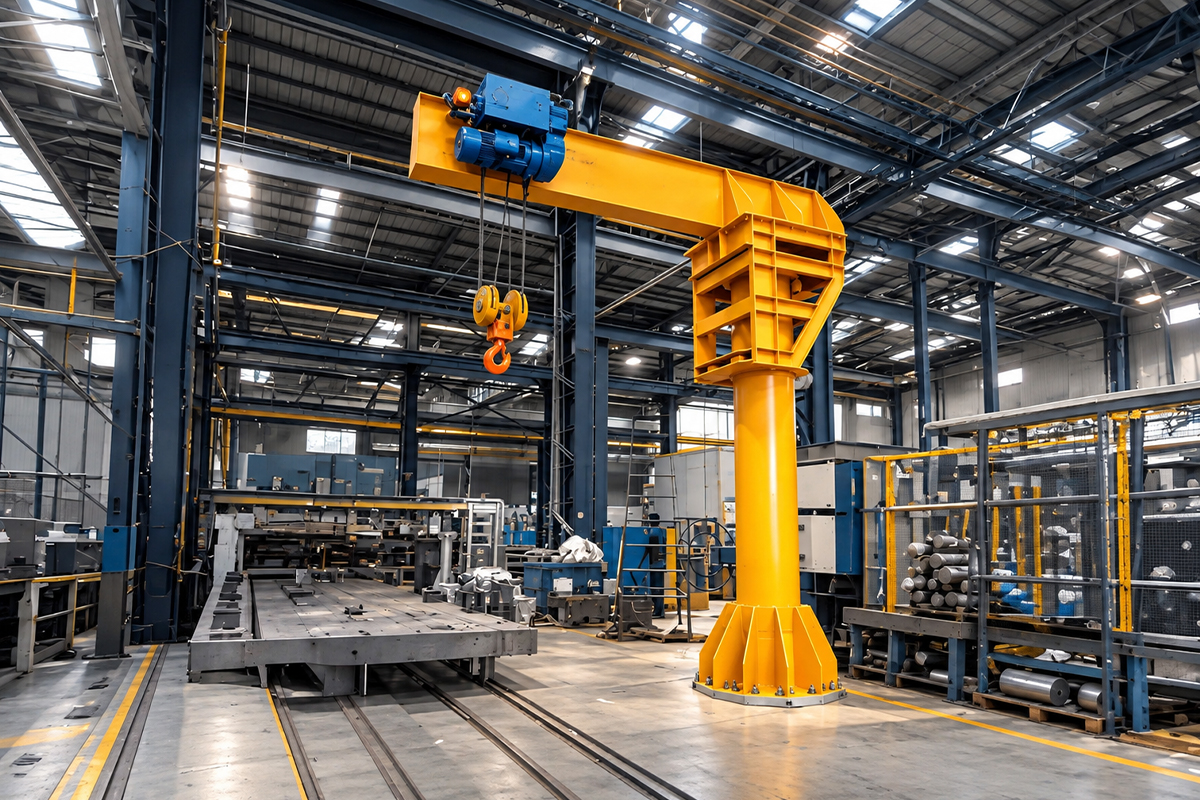
Pillar Mounted Jib Cranes: Engineering for Efficient Material Handling
Introduction
Efficient material handling is essential for maintaining productivity, safety, and operational efficiency in modern industrial facilities. In manufacturing plants, workshops, fabrication units, warehouses, and engineering industries, lifting and positioning materials accurately can significantly improve workflow. Pillar Mounted Jib Cranes are engineered to provide reliable and flexible lifting support for applications where precise load movement is required.
What Is a Pillar Mounted Jib Crane?
A pillar mounted jib crane is a floor-mounted lifting system designed around a vertical pillar with a horizontal jib arm. The jib supports a hoist and trolley that enable loads to be lifted, lowered, and moved across a defined working area. Since the crane is independently supported by its pillar, it can be installed without depending on the building's overhead structure. This configuration makes pillar mounted jib cranes suitable for workstations, production areas, assembly lines, maintenance zones, and material handling stations where localized lifting is required.
Key Advantages of Pillar Mounted Jib Cranes
One of the major advantages of these cranes is their ability to provide controlled and efficient material movement. The rotating jib arm allows operators to position loads within the crane's working radius, helping reduce unnecessary manual handling. Pillar mounted jib cranes can also optimize available floor space by providing dedicated lifting coverage in specific work areas. Their practical design makes them suitable for repetitive lifting operations and applications where overhead crane systems may not be necessary.
Other benefits include:
- Improved material handling efficiency
- Controlled lifting and positioning
- Reduced manual handling requirements
- Flexible installation options
- Better utilization of workstation space
- Suitable for repetitive lifting applications
- Easy integration with industrial workflows
Choosing the Right Crane Manufacturer
Selecting an experienced Pillar Mounted Jib Crane Manufacturer is important for achieving reliable performance and long-term operational value. The crane should be designed according to factors such as lifting capacity, jib length, working radius, lifting height, operating frequency, floor conditions, and application requirements. A professional manufacturer can evaluate the working environment and recommend a suitable crane configuration. Proper engineering, quality components, safety features, and accurate installation can help ensure smooth operation and dependable performance.
Conclusion
Pillar mounted jib cranes provide an efficient solution for controlled lifting and localized material handling across various industrial applications. Their independent support structure, flexible working range, and practical design make them valuable for improving workplace productivity and reducing manual material movement. By working with a reliable Pillar Mounted Jib Crane Manufacturer, industries can select a crane engineered to meet their specific lifting requirements while supporting safer and more efficient operations.
