
Our Blogs
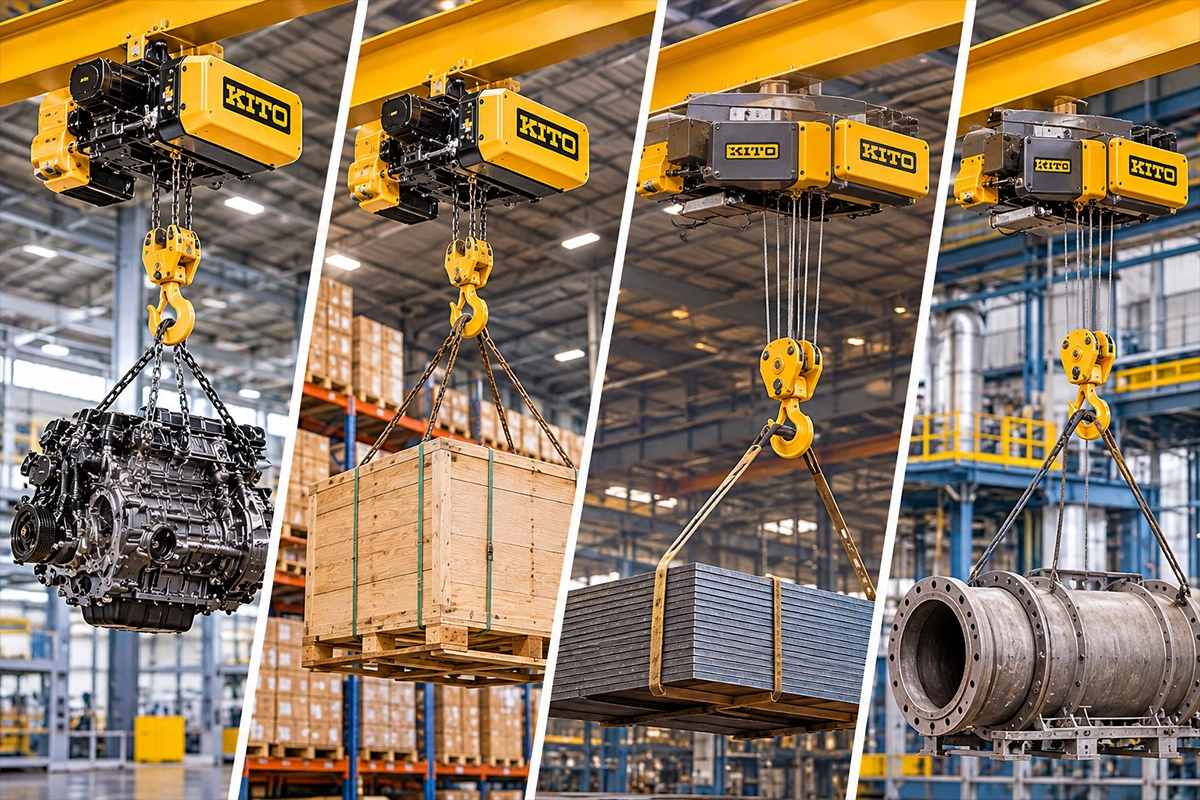
How to Select the Right KITO Hoist for Different Industrial Lifting Applications
I notice that in a factory lifting materials is part of the work. Machine components, materials and finished products often need to be moved from one place to another. When we move machine components, raw materials to finished products manually it can take time and effort, especially when the same task repeats throughout the day and moving these items can become tiring. A suitable hoist can help. A hoist can make the job faster and easier. KITO hoists are used in industries to handle lifting needs. Choosing a hoist model without knowing the real work can cost a lot. I have found that these points are helpful before choosing a hoist.
1. Check the Weight of the Materials
Start with the materials you work with regularly. A workshop lifting machine parts has different needs than a factory handling heavy equipment. Before choosing a hoist, check the load. Selecting the capacity will prevent overloading and will keep lifting operations within the capacity of the equipment.
2.Decide How the Hoist Will Be Used
- Manual Chain Hoist: Useful for repair work, workshops and for occasional lifting.
- Electric Chain Hoist: Ideal for production areas where materials are lifted several times a day.
- Wire Rope Hoist: Used for heavy loads and heavy-duty lifting applications.
- The choice should depend on the nature of the work, and not just on the most powerful model.
3. Measure the Available Lifting Space
Space may pose some difficulty. This will require you to have knowledge of the building’s height or headroom as well as space between the loading point and the unloading point. It is advisable that you measure the space because many factory buildings lack adequate headroom.
4. Consider the Speed of Operation
Some industries will need fast material handling. Others will require that it be done more slowly and cautiously. If you're using an assembly unit to handle machine parts, it may have different requirements than a warehouse, which only requires occasional handling. Choose a hoist that can match the actual rate of work.
5. Check Maintenance and Safety Requirements
Ask about inspection requirements, spare parts and servicing. Chains, hooks, brakes and limit switches need regular inspection. Regular servicing ensures that wear and damage are identified before it causes problems with day to day use. Training should be provided so they know how to use the equipment correctly.
6. Match the Hoist to Your Industry
A hoist used in an automobile factory may not be the same as one required in a fabrication workshop or warehouse. Consider the materials handled, working hours and installation conditions. Discussing these details with a supplier can help narrow down the available options.
Conclusion
The right hoist should suit the work being carried out, the available space and the weight of the materials handled. Making comparisons of these considerations prior to purchase will assist business entities in making an appropriate decision. Business entities looking for the right lifting device may seek the guidance of a dependable Kito Hoist Distribution in Coimbatore.
